Defect Detection

What Foodtrce catches.

From bruised produce to contaminated seals — inline, at production speed. Trained on your product, not a generic dataset.

4 defect categories
6 food product types
100% inline coverage
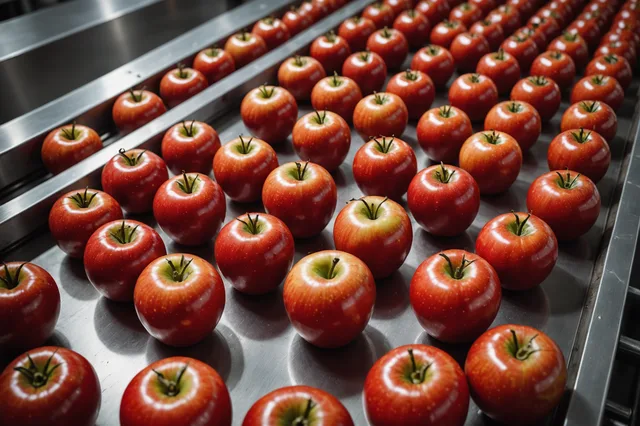
Close-up of produce on a conveyor belt with surface bruising visible under inspection lighting

Surface & Biological

Bruising over 5mm², discoloration when ΔE exceeds 3, mold spotting, and skin splits on fresh produce, dairy, and soft-pack items. Catches defects invisible to casual visual inspection at production speed.

Typical line speed: 200–600 u/min
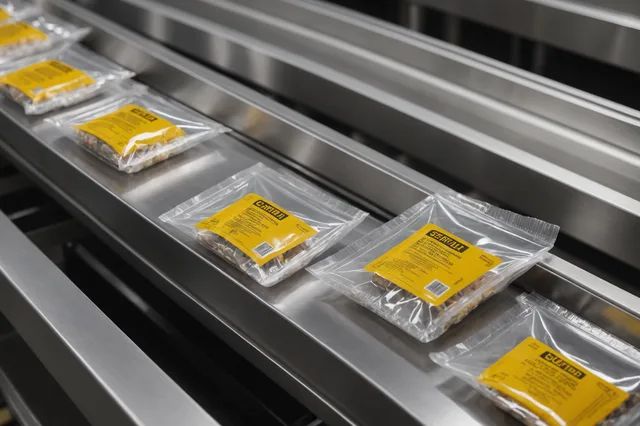
Packaged food items on a production line showing seal area under inspection camera view

Packaging Integrity

Seal contamination from product ingress, partial welds, wrinkle patterns correlated with seal failure, underfill, and headspace anomalies in flexible and rigid packaging formats.

Typical line speed: 400–800 u/min
Product containers on a production line with visible label misalignment under inspection lighting

Label & Print Quality

Label skew beyond ±0.5mm, missing date codes and batch codes, print registration errors, smear and fade. Barcode readability pre-checked before the unit leaves the line.

Typical line speed: 200–800 u/min
Food product stream on conveyor belt with a foreign material particle visible on one unit

Foreign Objects

Surface-visible hard plastics, packaging fragments, and bone chips. Camera inspection detects what metal detectors and X-ray miss: objects that are low-density or surface-deposited. It does not replace metal detection or X-ray — it fills the gap for visible-surface contamination those systems weren't designed to catch.

Typical line speed: 200–600 u/min

Product Categories

What product does your line run?

Each food category has a distinct defect profile — bruising patterns on produce look different from seal integrity failures on flexible snack packaging. We train your model specifically for what your line runs.

"Our rejection rate from the distributor dropped from 4–5% to under 0.8% in six weeks. The label skew threshold was the unlock."

Northgate Packing Co. is a regional contract packer running a 500 units/min mixed-SKU poultry line. Before Foodtrce, distributor rejections for label misalignment were affecting 4–5% of cases per run — each rejection costing the facility in logistics, rework, and retailer relationship capital.

The core problem: their existing process relied on end-of-line spot checks performed at 1-in-40 sampling. At 500 u/min, that inspector was examining roughly 12 units per minute — 4 seconds per unit, on a moving line, under consistent production pressure.

Foodtrce was deployed in one day. Label skew threshold set at ±0.3mm — tighter than their retailer's ±0.5mm dock standard. The system flagged units for rejection before they reached the end-of-line packing station.

Result: distributor rejection rate under 0.8% within six weeks of deployment. The facility now has a documented defect log for every production run — useful data for both internal QA review and retailer compliance conversations.

Northgate Packing Co. is a synthetic case for illustration. Results are based on similar pilot deployments. Contact us for specifics relevant to your line.
Tell us what your line makes.

We'll walk you through the detection configuration for your product category, your typical line speed, and your primary defect concern — and tell you honestly what the system can and can't catch.