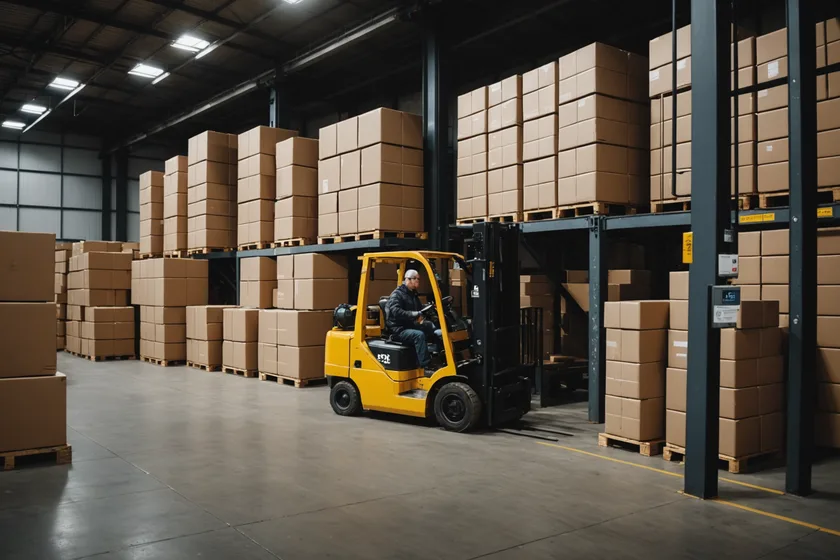
A retailer dock rejection is a specific kind of painful. The product usually isn't destroyed — it's just rejected at receiving, loaded back on the truck, and returned to you or sent to a secondary market at a steep discount. The product was manufactured. It was packed. It was palletized and shrink-wrapped. It traveled 400 miles. And now it's coming back, or it's written off.
The cost isn't just the product value. It's the round-trip freight, the restocking or disposition labor, the chargeback the retailer issues (which at some large grocery chains can be 2x the invoice value of the rejected lot), and the hit to your on-time, in-full (OTIF) scorecard. Consistent OTIF failures with major retail customers are a relationship problem that takes quarters to repair.
The reason dock rejections are particularly frustrating for QA teams is that the defects causing most of them — label misalignment, incorrect date codes, damaged packaging, barcode scan failures — are catch-at-the-line problems. They don't require sophisticated technology to detect. They require inspection to happen before product leaves the building.
What Retailers Actually Reject For
Rejection criteria vary by retailer, but the most common causes cluster into a predictable short list. Label-related rejections — wrong label applied, label out of position making barcode unscannable, missing best-by date, incorrect UPC — typically account for 35–50% of dock rejection events at food manufacturers we've worked with. This range comes from informal tracking conversations with production managers, not published research, but the pattern is consistent enough to be operationally useful.
Packaging integrity failures are the next major bucket: damaged seals that create contamination risk or aesthetically unacceptable product, crushed corners on cases or individual units, and loose or unseated closures. Most retailers, particularly large grocery chains with strict appearance standards, will reject a full pallet if more than 2–3% of units in a visual inspection sample show visible packaging damage.
Weight and fill non-conformances come third. Some retailers pull random units from incoming pallets and weigh them. If your checkweigher has been drifting and you haven't caught it, the dock is where you find out.
Date code and lot traceability issues are less common as a cause of dock rejection but carry disproportionate consequences when they occur. A pallet with missing or incorrect lot codes is a traceability failure, not just a cosmetic one. For any retailer with strict recall response procedures, this is grounds for immediate hold and escalated investigation.
Why End-of-Line Sampling Misses These Defects
The standard end-of-line QA approach — pull a sample from each production run, inspect manually, sign off — has a structural problem: it's sampling, not inspection. On a line running 400 units per minute with a 1-in-50 sample rate, an inspector handling 8 units per minute is looking at each unit for roughly 7 seconds. In that 7 seconds, they're checking for multiple defect types against a mental checklist while standing in a noisy, sometimes cold, production environment.
More fundamentally, defects on food production lines often cluster. A label applicator that's drifting out of alignment affects every unit until someone resets it. A sealer running hot creates a bad seal run. A printer ribbon that's fading produces unreadable date codes on consecutive units. If your sampling interval happens to fall between the start and end of that clustered defect run, the entire run ships.
Inline vision inspection addresses the clustering problem directly: every unit passes through the camera field of view, so a 200-unit defect cluster is a 200-unit detection event, not a probability missed by sampling. The system flags the defect onset, the reject gate removes affected units from the line, and the defect record in the inspection log gives your QA team the timestamp and image data to investigate the root cause.
The Specific Defects Inline Inspection Catches Before Shipment
Let's be concrete about what a properly deployed inline vision system actually catches in the context of retailer rejection prevention.
Label position drift. Label applicators have mechanical tolerances that expand with wear. A label that starts a shift correctly positioned may be 3mm left by end of shift as the applicator head warms or the adhesive roll tension changes. Inline vision measuring label edge position against a fixed reference detects this drift in real time — the system can generate an alert before the drift becomes a rejection-level defect, not just a flag on the units already produced.
Barcode scan quality. Inline cameras integrated with barcode decode modules verify that every barcode scans successfully at the time of production, not at the receiving dock. A barcode that's smeared, wrinkled, or printed at too low a contrast for scanner decode is caught on the line. The unit is rejected. The retailer's dock scanner never sees it.
Date code presence and legibility. Inkjet date coders on food lines are mechanical devices that fail in predictable ways: running low on ink produces faint characters; clogged heads produce missing digits; power interruptions produce blank outputs. A camera OCR module reading the date code on every unit catches these failures immediately. Running an empty date code field through to palletization is a shipment-day decision no one wants to make.
Seal edge geometry. Heat-seal failures that create visible wrinkles, partial welds, or open corners are detectable by camera inspection at line speed. The correlation between visible seal geometry anomalies and functional seal failure isn't perfect — we're not saying that every camera-flagged seal is definitely compromised — but catching seal geometry anomalies before shipment substantially reduces the rate of packaging-integrity rejections at the dock.
A Scenario: Label Drift on a Mixed-SKU Line
A regional contract packer running a mixed-SKU sauce line at 360 units per minute was experiencing a dock rejection rate of approximately 4.5% of pallets shipped to a major retail customer. Root cause analysis after each rejection was difficult because by the time the pallet was rejected and returned, the production record didn't have unit-level inspection data — just a shift sign-off from the end-of-line inspector.
After deploying inline vision inspection on that line, the rejection rate dropped to under 0.9% within the first two months. The data that emerged from the inspection logs was instructive: approximately 60% of the units that would have caused rejections had label position defects, and nearly all of those occurred in the last 90 minutes of each production shift on SKUs using a specific label stock that behaved differently in warm production conditions. That was a finding that couldn't have come from end-of-line sampling — it required per-unit inspection data to see the pattern.
With that pattern identified, the maintenance team adjusted the label applicator pressure settings specifically for that SKU and that time-of-day operational window. Rejection rate dropped further, to under 0.4%.
What Inline Inspection Doesn't Solve
It's worth being direct about the limits here. Inline vision inspection doesn't solve dock rejections caused by picking errors — shipping the wrong SKU to the wrong customer, mismatching a purchase order. It doesn't solve weight non-conformances unless it's integrated with a checkweigher. And it doesn't address rejections driven by retailer-side receiving errors, which do happen.
Inline inspection is a tool for catching the physical defects that happen at the line and would otherwise escape because sampling doesn't cover every unit. It's not a substitute for accurate order management, good warehouse practices, or clear communication with receiving teams.
But for manufacturers where the primary rejection driver is label-related or packaging-integrity-related defects — which, based on the pattern above, describes a significant portion of food manufacturers shipping to retail — inline inspection on the production line addresses the problem at source, before a rejected pallet has burned logistics cost and relationship capital.